Productive Zone of Disequilibrium
A mental model for leading others... and yourself.
di Marco Santonocito il 17 dic 2025
Ciao, sono Marco.
Il 1º gennaio 2025 mi sono posto una domanda: «L'AI può aiutare un solo founder a raggiungere €1M?»
Invece di limitarmi a chiedermelo, ho deciso di metterlo alla prova. Con l'AI come co-pilota, mi sono messo a costruire un business da €1M partendo da zero, mentre tenevo ancora il mio lavoro.
Niente fronzoli. Niente scorciatoie. Solo la realtà cruda e senza filtri del mio One Million Goal. Condivido tutto: le vittorie, le difficoltà e le lezioni che fanno davvero la differenza.
Curioso di scoprire cosa è possibile quando punti tutto sull'AI?
Hey, I’m Marco 👋
I build in public toward €1M, and you get to watch and steal everything I learn. You can read more about me and my project here.
Revenue to date: €220,069 / €1,000,000
A few days ago I read a post by Giacomo Falcone titled “The science of helicopter parenting and what happens when parents overhelp.”
It’s one of those pieces that stays with you, not because it tells you something radically new, but because it gives words and structure to a tension you already feel.
The core idea is simple:
When parents overprotect, overguide, and overhelp, they unintentionally prevent children from developing autonomy. Growth requires friction. Remove all of it, and you don’t get safety. You get fragility.
Reading it brought me back to a concept I first encountered years ago, while working as Head of Product at Talent Garden. It was introduced to me by Alessandro Braga, our CDO at the time, and it’s called the Productive Zone of Disequilibrium.
The uncomfortable space where growth happens
The term comes from Ronald Heifetz, professor at Harvard and co-creator of the Adaptive Leadership framework.
At its core, the idea is this:
People grow not when they feel perfectly safe, and not when they feel overwhelmed, but in the narrow band in between.
Leadership, according to Heifetz, is about helping people navigate adaptive challenges: problems with no known solution, where learning and experimentation are required.
To do that, leaders must create what psychologists call a holding environment. A space that is both:
- Safe enough that people don’t panic or shut down;
- Uncomfortable enough that they can’t stay exactly as they are;
Donald Winnicott, a pediatrician and psychoanalyst, used this idea to describe good parenting long before it entered leadership theory.
Think of a child learning to ride a bike.
The parent runs next to them. The child does all the work: balancing, pedaling, steering. They wobble. They struggle. They might fall.
But they also know someone is there.
If the parent holds the bike the entire time, the child never learns.
If the parent lets go completely, too early, the child panics.
The holding environment is that subtle, dynamic balance.
The Productive Zone of Disequilibrium
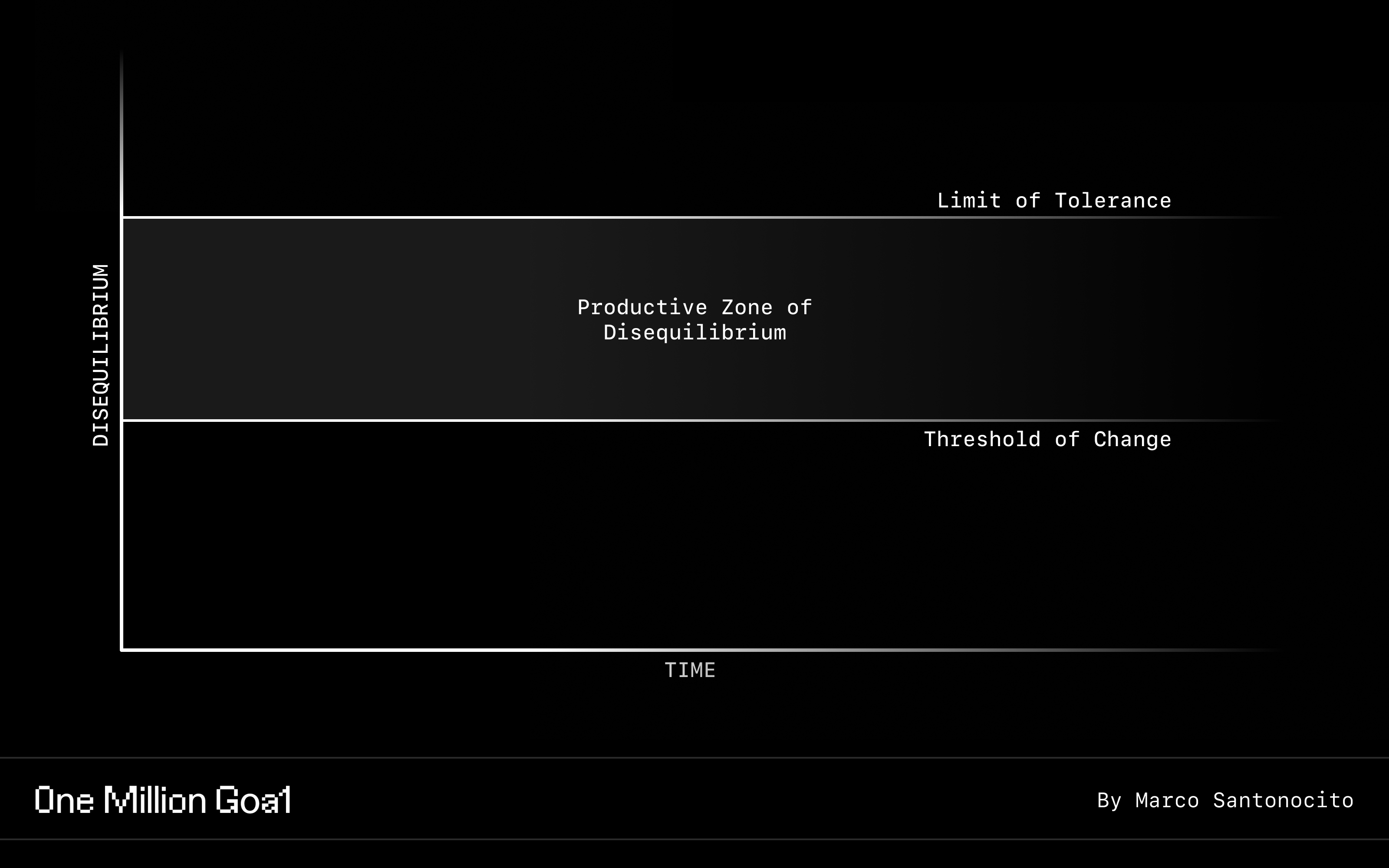
Heifetz visualizes this with a simple mental model.
On one axis, you have time. On the other, the level of disequilibrium or stress a person experiences.
There are two key thresholds:
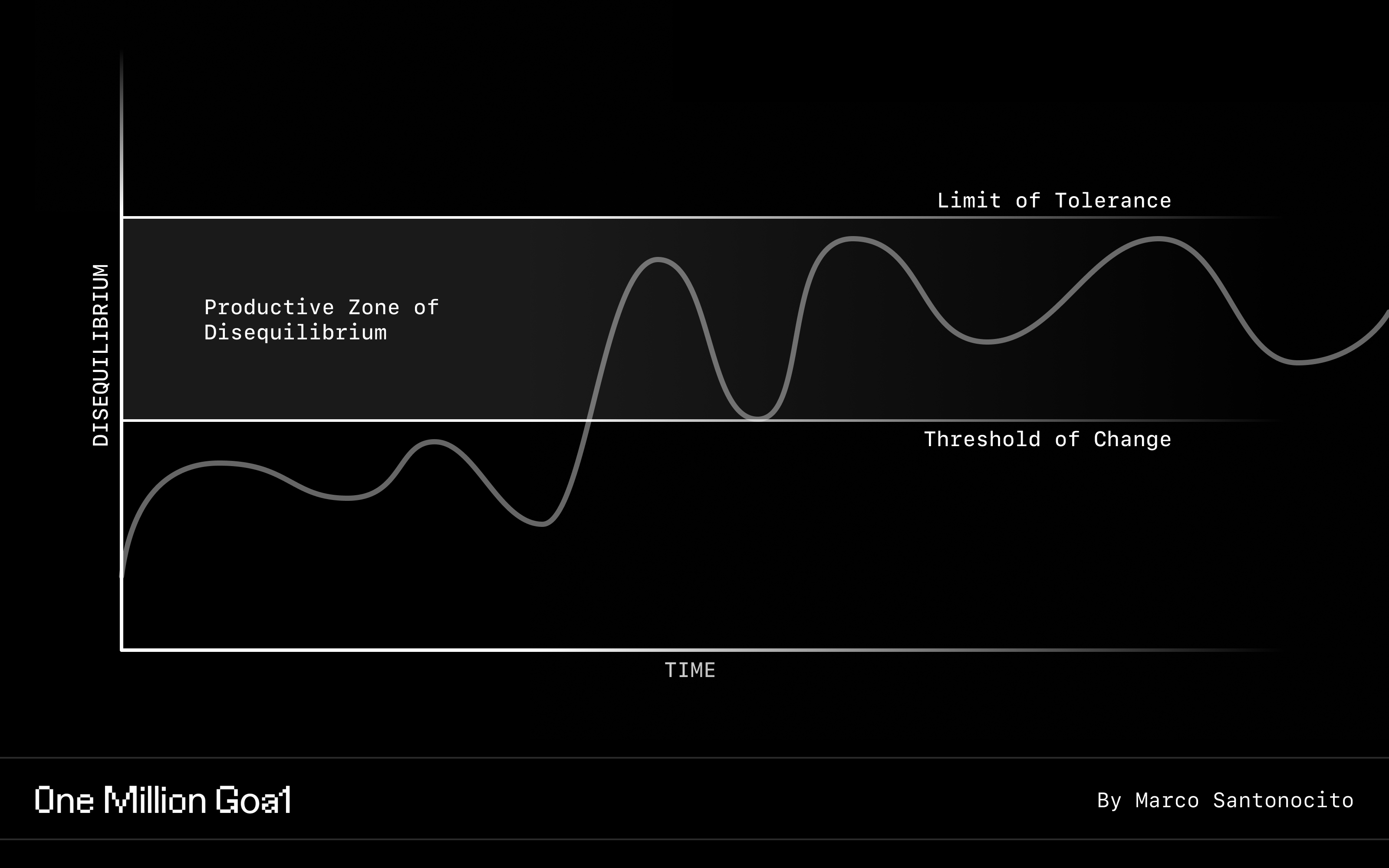
- A threshold of change: below this, nothing happens. People are comfortable, competent, and static.
- A limit of tolerance: above this, people freeze, panic, or disengage.
The space between these two lines is the productive zone of disequilibrium.
That’s where creativity happens.
That’s where people experiment.
That’s where learning sticks.
Great leaders don’t eliminate discomfort. They regulate it.
When someone is below the threshold, they raise the temperature: more responsibility, a harder problem, a new constraint.
When someone is above their limit, they lower it: structure, guidance, reframing, support.
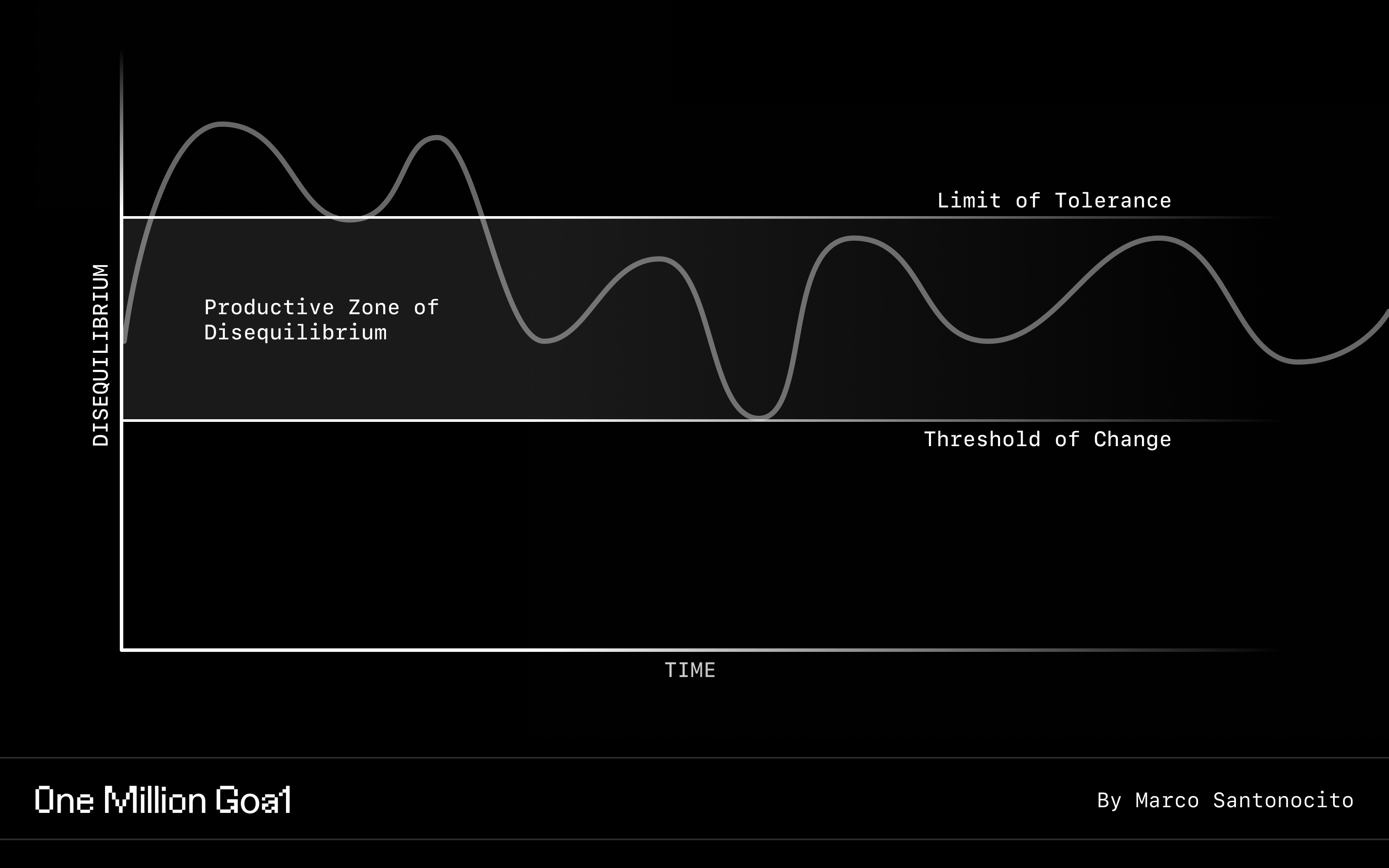
Not by giving answers, but by helping people find their own.
Why this suddenly feels very personal
Here’s the interesting part.
Reading about helicopter parenting, and thinking again about the productive zone of disequilibrium, made me realize how closely this applies to my current phase as a founder.
There’s no manager setting the temperature now.
No organization acting as a holding environment.
It’s just you.
And the temptation is the same one described in parenting:
- Either overprotect yourself, staying in safe territory, polishing what already works
- Or push too hard, stacking too many bets, too much pressure, too fast
Both are forms of miscalibration.
Founders, much like leadership, is a continuous act of self-regulation. You are constantly asking:
- Am I bored or avoiding discomfort?
- Or am I overwhelmed and pretending it’s “just hustle”?
Progress doesn’t come from eliminating disequilibrium.
It comes from learning to stay inside it, deliberately.
A useful question to keep around
So here’s a question I’ve started asking myself more often, and one I think applies equally to leaders, founders, and solo builders:
Am I below my threshold of change, or above my limit of tolerance?
If you’re below it, you probably need a bigger challenge.
If you’re above it, you probably need more structure, not more pressure.
Growth lives in between.
And maybe that’s the real job, whether you’re leading a team or yourself:
not removing friction, not glorifying stress, but learning how to tune the temperature.
Because nothing meaningful grows in comfort.
And nothing grows in panic either.