Marc Lou
How one French waiter turned radical transparency into a $1M solo empire.
Ciao, sono Marco.
Sto usando l'AI per costruire un portfolio di micro-business con l’obiettivo di raggiungere €1M di revenue.
Qui documento tutto il percorso: idee, prodotti, lanci, numeri, errori e lezioni pratiche su AI, product building e growth.
Se vuoi seguire l’esperimento, iscriviti alla newsletter.
Hey, I’m Marco 👋
I build in public toward €1M, and you get to watch and steal everything I learn. You can read more about me and my project here.
Revenue to date: €220,049 / €1,000,000
Picture this: You’re 28 years old, living in your parents’ basement in France, clinically depressed, and your last business venture made exactly $4 selling PDFs about male bladder control through ads on adult websites.
Most people would call this rock bottom. Marc Lou called it Tuesday.
Today, Marc generates $125,000+ monthly from a portfolio of digital products he builds alone from his hammock in Bali. He surfs every morning, documents every business decision publicly, and has turned transparency into his most profitable competitive advantage.
But here’s what makes Marc’s story different from every other rags-to-riches entrepreneurial fairy tale: he documented the entire journey in excruciating detail. Every failure. Every breakdown. Every pivot. The actual numbers, not the sanitized highlights.
His story isn’t about luck. It’s about iteration, identity, and the courage to keep shipping.
The Education of a Serial Failure (2016-2021)
Marc Lou’s entrepreneurial education cost him five years and nearly his sanity. The curriculum? Learning what doesn’t work.
Chapter 1: The Zuckerberg Delusion (2016-2017)
Fresh out of computer science school, Marc watched “The Social Network” during a hungover Sunday morning and experienced what he now calls “the most expensive epiphany of my life.” He decided he was the next Mark Zuckerberg.
His billion-dollar idea? Tinder for sports lovers.
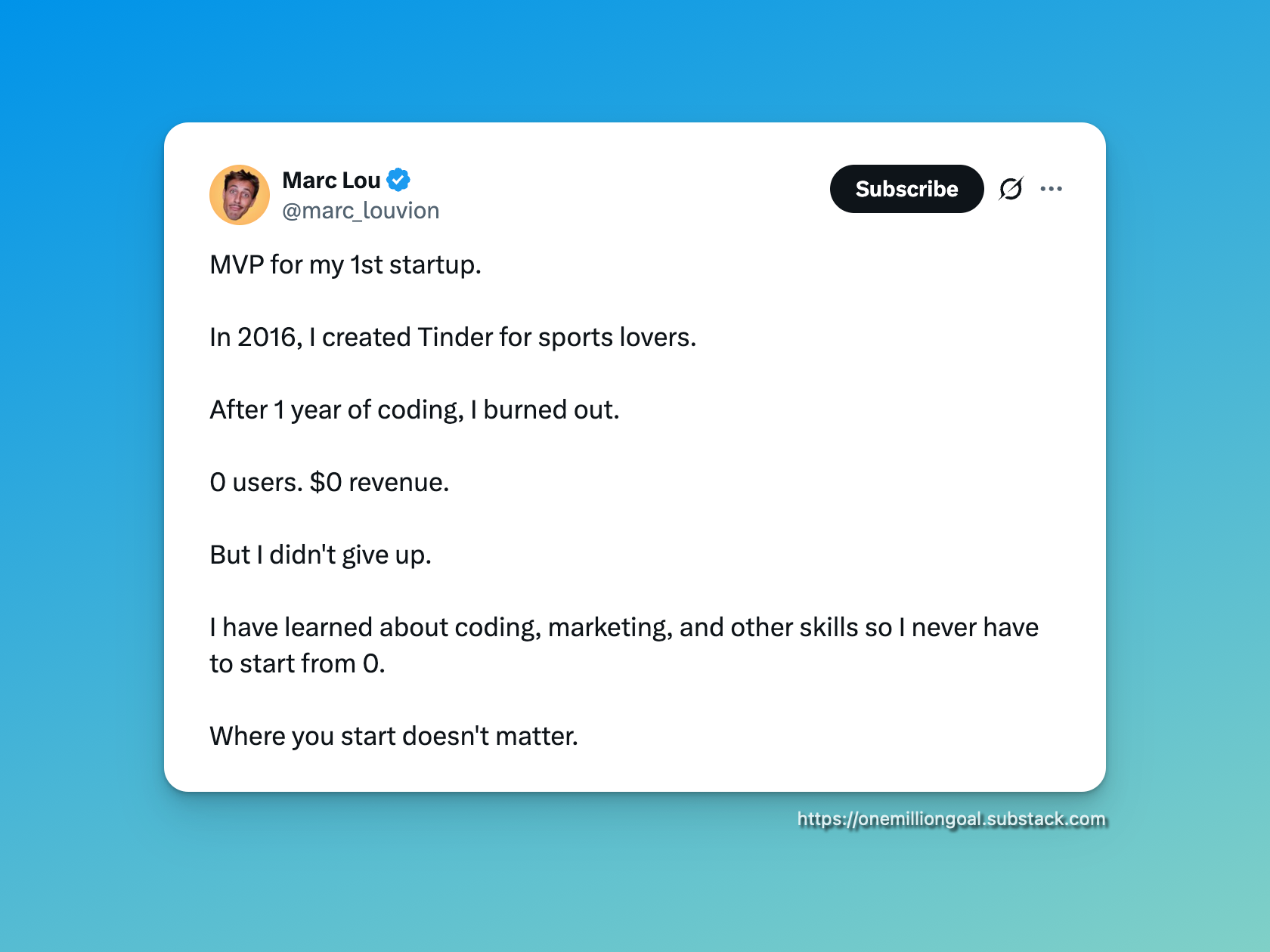
For an entire year, Marc lived with his parents, worked as a waiter for $10/hour, and built an app that... never worked. Users couldn’t even sign up. He was literally the only user of his own product. The app was so broken that after 365 days of development, he threw away all the code in 24 hours.

💡 The lesson: Ideas are worthless without execution, and execution is worthless without market validation.Chapter 2: The Seoul Mirage (2017-2018)
Determined to prove himself, Marc moved to Seoul with a friend who promised to raise $100,000 from VCs for an AI startup. They did raise the money. They built a product. They found zero customers.

After nine months, the company shut down with nothing to show for it. Marc hit rock bottom so hard he started smoking again.
💡 The lesson: Great products without customers are just expensive hobbies.Chapter 3: The Korean Glove Fiasco (2018)
Broke and desperate, Marc saw a Facebook ad for couple gloves—mittens that let couples hold hands together. Genius, he thought. He partnered with a Korean grandmother who knitted 50 gloves. The Facebook ads failed. They ended up selling gloves in the street during Seoul’s freezing winter, getting drunk to stay warm.

They barely broke even.
But something clicked: Marc had made his first dollar online. It was proof the solo business model worked.
💡 The lesson: Revenue, even tiny revenue, validates more than any pitch deck.Chapter 4: The First Real Success (2018-2020)
A marketer named Andre gave Marc advice that changed everything: “Sell it before you build it.”
Marc created GameWidget, a gamification tool for escape room businesses. Instead of building first, he sent cold emails describing the concept. During a 42-minute call with an Australian business owner, he made his first sale before writing a single line of code.
GameWidget grew to $4,000 monthly recurring revenue. Marc moved to Bali, learned to surf, and thought he’d finally made it.
Then COVID-19 hit. Escape rooms closed. Revenue went from $4,000 to $0 in 24 hours.
💡 The lesson: Even successful businesses can be fragile if they depend on a single industry.Chapter 5: The Breakdown (2020-2021)
Back in France, living with his parents again, Marc spiraled into depression. One morning, while making coffee, he started crying for no reason. Later, he punched holes in his bedroom wall four times before his parents intervened.
He took a job with influencer Tai Lopez making $9,000/month—more money than he’d ever seen. For the first time in years, he had a sense of purpose and structured time off. He started reading books, working out, and prioritizing sleep.
Then Tai Lopez fired him.
💡 The lesson: Rock bottom can be a foundation if you use it to rebuild your fundamentals.The Build-in-Public Revolution (2021-2025)
That’s when Marc discovered something unexpected: success isn’t built in silence. It’s built in public.
Marc’s breakthrough came from discovering a tweet by Pieter Levels about building startups in public. This transparency-first approach would become his secret weapon.
The New Rules (December 2021)
With $20,000 in savings and a Korean wife who believed in him, Marc returned to Bali with five non-negotiable rules:
- Prioritize sleep no matter what
- Share everything transparently on Twitter
- Ship the smallest possible version of every idea
- Always launch and market aggressively
- Focus on process goals, not outcome goals
The Rapid Launch Phase (2022)
Marc built 20+ products in 12 months. Most failed, but each taught him something:
- Mood2Movie: Movie recommendations based on mood (viral on Reddit)
- Habits Garden: Gamified habit tracker ($500/month MRR)
- Books Calculator: Reading progress tool (went viral)
- Naval 25: Collection of Naval Ravikant quotes
- Decision Game: Web game to stop overthinking
The strategy wasn’t to hit home runs—it was to get at bat repeatedly and learn from each swing.
Revenue Growth Timeline:
- 2021: $0 (living with parents)
- 2022: ~$2,000/month (experiments)
- 2023: $263,000 total revenue (breakout year)
- 2024: $50K-100K+ monthly
- 2025: $125,000+ monthly with 92% profit margins
The Breakthrough Products
ShipFast: The Accidental Goldmine
By mid-2023, Marc realized he was rebuilding the same infrastructure for every project: authentication, payments, database setup, email integration. He spent a week consolidating this into a reusable codebase.
Then he had an idea: What if other developers would pay for this?
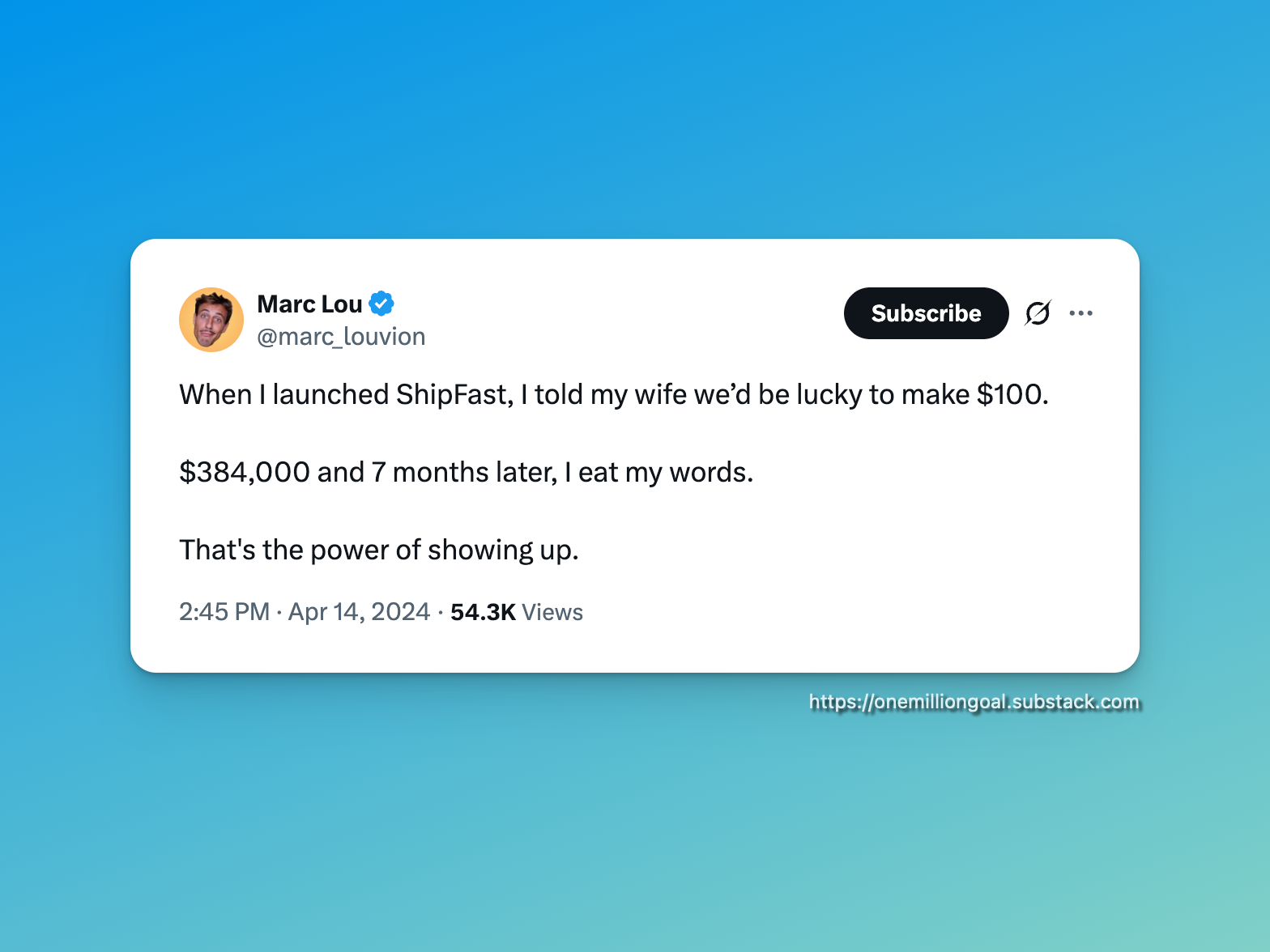
He packaged his internal boilerplate into ShipFast—a Next.js starter kit that lets developers “ship your startup in days, not weeks.” Launch price: $199.
The results were immediate:
- First 48 hours: $6,000
- First month: $40,000
- Peak monthly revenue: $65,000
- Total revenue by 2024: $300,000+
- Customers: 7,680 developers and counting
CodeFast: Teaching What He Learned
In 2024, Marc launched CodeFast, an AI-powered coding course teaching entrepreneurs to build SaaS products in 14 days. Unlike typical programming courses aimed at job-seekers, CodeFast targeted people who wanted to quit their 9-5 jobs.
Peak performance:
- November 2024: $88,500 revenue
- January 2025: $82,600 revenue
- Launch weekend: $92,000 in 48 hours
DataFast: Turning Analytics Into a Show
While most analytics dashboards feel like spreadsheets in disguise, Marc wanted something fun—something people would actually want to share. So he built DataFast, a real-time analytics platform that visualizes website traffic on a glowing 3D globe.
It started as a weekend experiment to track visitors on his own sites, but the visuals went viral on X. Indie hackers began posting their live traffic globes, tagging Marc for credit. Within weeks, what began as an internal side tool became a $15K/month product.
The magic wasn’t in the data—it was in the emotion. By turning analytics into a game, DataFast made growth feel exciting again.
- January 2025: $1,400
- October 2025: $16,500
The Supporting Portfolio
Marc’s ecosystem includes:
- TrustMRR: The database of verified startup revenues (~$12,000/month)
- IndiePage: Portfolio builder for indie hackers ($700/month)
- BioAge: Your biohacker dashboard (~$600/month)
- ZenVoice: Stripe invoicing tool ($300/month)
- LaunchViral: Course on creating viral launch videos ($200/month)
- ByeDispute: Payment dispute prevention (~$100/month)
The Method Behind the Madness
Philosophy: Speed as Strategy
Marc’s entire approach centers on velocity over perfection. His mantras:
“Building a successful startup is a repetition of tiny failures.” “Ship the 24-hour version of your idea.” “Every startup has a weekend version—find it.”
This philosophy emerged from painful experience. His early failures came from spending months perfecting products nobody wanted. Now he ships within days and iterates based on real user feedback.
Tech Stack: Boring and Profitable
Marc deliberately uses a simple, repeatable tech stack:
- Frontend: Next.js + React + TypeScript
- Backend: Node.js + MongoDB
- Payments: Stripe or LemonSqueezy
- UI: Tailwind CSS (core utilities only)
- Hosting: Vercel
- AI Tools: GPT-4, Cursor AI for coding assistance
The philosophy: Use proven technologies, avoid shiny objects, focus on shipping products rather than learning new frameworks.
Marketing: Transparency as Competitive Advantage
Marc’s marketing playbook breaks every traditional rule:
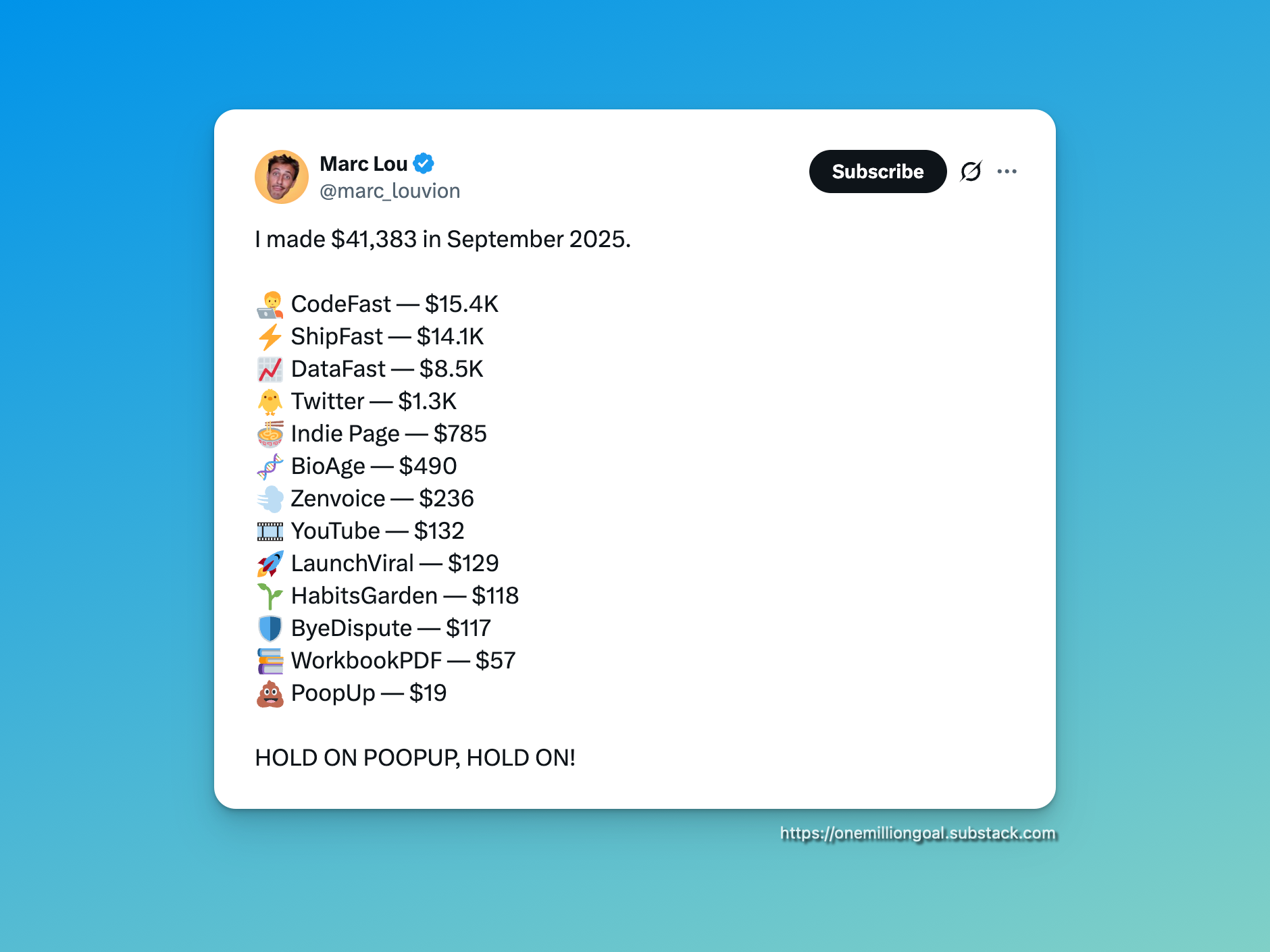
🎯 Radical Transparency: Monthly revenue reports with actual screenshots. Sharing failures alongside successes. Livestreaming product development in real-time.
🎬 Viral Content Strategy: Marc creates hilarious demo videos where he deepfakes himself into movie scenes. His ByeDispute launch video featuring him as Leonardo DiCaprio’s sidekick in Wolf of Wall Street went viral and drove significant sales.
👥 Community-First Approach: Rather than interruption marketing, Marc builds relationships. He has 215,000+ Twitter followers who literally watch him work. When he launches something, thousands of potential customers are already invested in his journey.
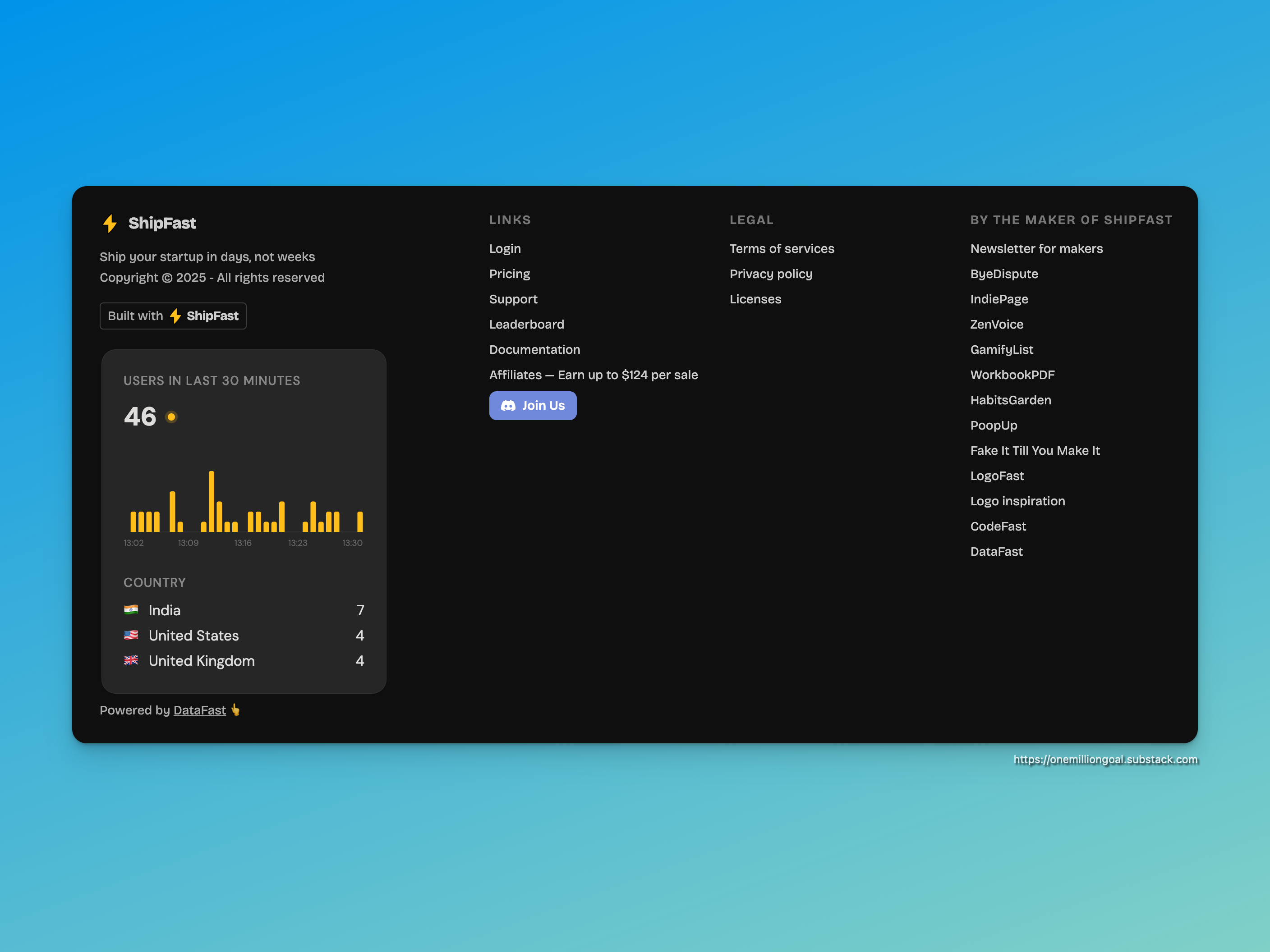
🔄 Cross-Pollination: Every product footer links to his other products. Customers who buy ShipFast discover CodeFast, ZenVoice, and IndiePage. This ecosystem approach maximizes customer lifetime value.
📺 Content as Product: Marc’s YouTube channel (133K+ subscribers) and newsletter (42K+ subscribers) aren’t just marketing—they’re products that drive revenue directly while building audience for everything else.
The Numbers Game: Revenue Breakdown
💰 October 2025 Monthly Revenue: $65,700
- CodeFast: $21,300
- ShipFast: $17,400
- DataFast: $16,500
- TrustMRR: $8,600
- Other Products: $1,856
🚀 Business Model Innovation:
- One-time purchases instead of subscriptions (reduces churn anxiety)
- “Popcorn Pricing” psychological pricing that feels like an impulse buy
- No refund policy (increases commitment, reduces support overhead)
- 92% profit margins due to digital-only products and solo operation
⚙️ Operational Efficiency:
- Zero employees
- ~$4,000/month in business expenses
- Fully remote, location-independent
- Automated systems handle most routine tasks
The Psychology of Success
Failure as Education
Marc reframes failure as tuition payments in the university of entrepreneurship. Each failed project taught specific lessons:
- Tinder for sports lovers: Ideas need market validation
- Seoul AI startup: Products need customers, not just investors
- GameWidget: Single-industry dependence is risky
Process Over Outcomes
Instead of “lose 10 pounds,” Marc sets “work out every day.” Instead of “make $10K this month,” he focuses on “ship one product every month.” This shift removes anxiety about results he can’t directly control and creates momentum through consistency.
Identity-Based Habits
Marc doesn’t just build products—he’s built an identity as someone who ships fast and shares transparently. This identity becomes self-reinforcing. When faced with decisions, he asks: “What would someone who ships fast do?”
Why Marc Lou Matters for OMG
Marc Lou represents the archetype that One Million Goal aims to showcase and multiply. Here’s why his approach matters:
✅ Proof of Concept: He demonstrates that one person can build a million-dollar business using modern tools and transparent practices. No venture capital, no team, no traditional business model required.
📚 Replicable Methodology: Unlike many entrepreneurial success stories that rely on unique circumstances or hidden advantages, Marc’s approach is systematically documented and teachable.
📈 Real Numbers, Real Process: In an industry full of guru mythology and vague success stories, Marc provides actual revenue screenshots, detailed explanations of his methods, and honest assessments of what worked versus what failed.
🔄 Modern Business Model: Marc has created what amounts to a one-person media company that happens to sell software. His personal brand, educational content, and product portfolio work synergistically to create multiple revenue streams and competitive moats.
🤝 Community Over Competition: Rather than hoarding knowledge, Marc actively shares everything he learns. This abundance mindset creates network effects that benefit everyone in the ecosystem.
🌴 Sustainable Lifestyle: Marc has achieved what most entrepreneurs claim to want: complete creative and financial freedom, location independence, and work that energizes rather than drains him.
The Marc Lou Blueprint
For OMG members, Marc’s journey provides both inspiration and instruction manual:
📍 Phase 1: Foundation Building (Months 1-6)
- Choose a simple, proven tech stack
- Start building in public immediately
- Launch small experiments monthly
- Focus on learning, not earning
🎯 Phase 2: Audience Development (Months 6-18)
- Share transparently on social media
- Document your process, not just results
- Solve your own problems first
- Build relationships before pitches
🚀 Phase 3: Product-Market Fit (Months 18-36)
- Test multiple products with your audience
- Double down on what works
- Kill what doesn’t work quickly
- Reinvest profits into growth
💼 Phase 4: Portfolio Expansion (Year 3+)
- Create ecosystem of complementary products
- Cross-promote within your portfolio
- Build recurring revenue streams
- Scale through systems, not staff
Marc Lou cracked a code that many entrepreneurs miss: in the attention economy, transparency is the ultimate differentiator.
While others obsess over stealth mode and competitive advantages, Marc builds his moat through radical openness. His customers know exactly how much money he makes, which products are struggling, and what he’s working on next. This vulnerability creates trust, and trust creates sales.
His technical approach—boring stack, fast shipping, solve your own problems—isn’t revolutionary. His marketing approach—build audience first, share everything, create helpful content—isn’t new either.
But combining transparent personal branding with rapid product iteration while building for a specific community? That’s the alchemy that turns a depressed waiter into a millionaire solopreneur.
Marc didn’t just build startups — he built a new archetype for the solo age.